

 Leeds
Leeds Doncaster
 Sheffield
 Bradford
 Hull
Hull Halifax
 Sunderland
 Newcastle
 Middlesborough
 Yorkshire Moors
 Teesside
 Cumbria
 Harrogate
 York
York Yorkshire Dales
 Northumberland
 Goole
Goole Carlisle
 Keswick
 Kendal
 Barrow-in-Furness
 Lancaster
 Blackpool
 Morecambe
 Southport
 Liverpool
 Wigan
Wigan Manchester
 Blackburn
 Burnley
 Forest of Bowland
 Oldham
 Chester
 Stockport
 Peak District
 Skipton
 Crewe
Crewe Rotherham
 Stoke
Stoke Driffield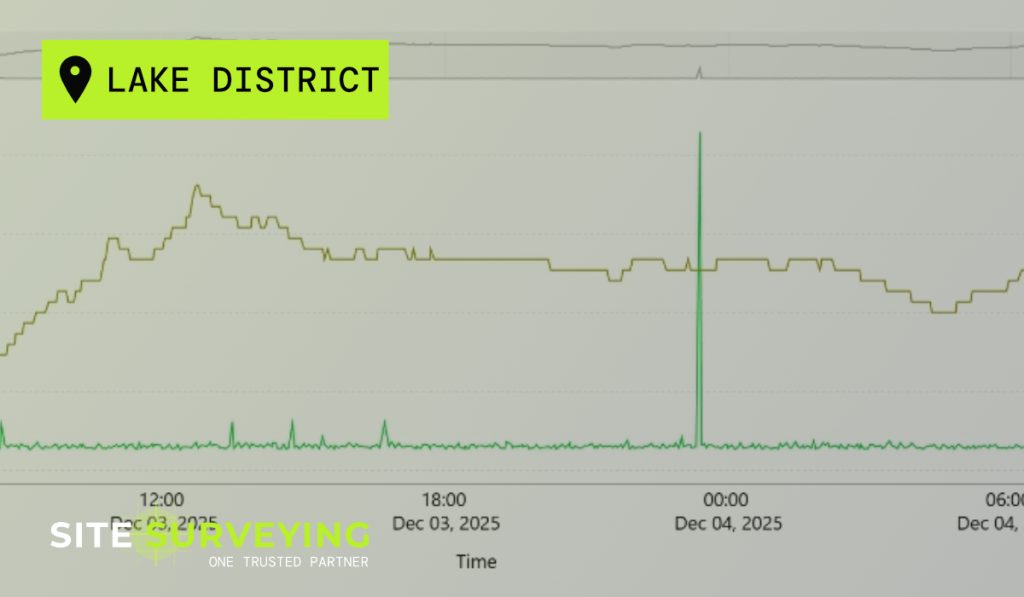
SETTLEMENT MONITORING
STRUCTURAL MOVEMENT
VIBRATION RECORDING
What Monitoring Is For.
What Monitoring Is For.
What Happened.
What Happened.
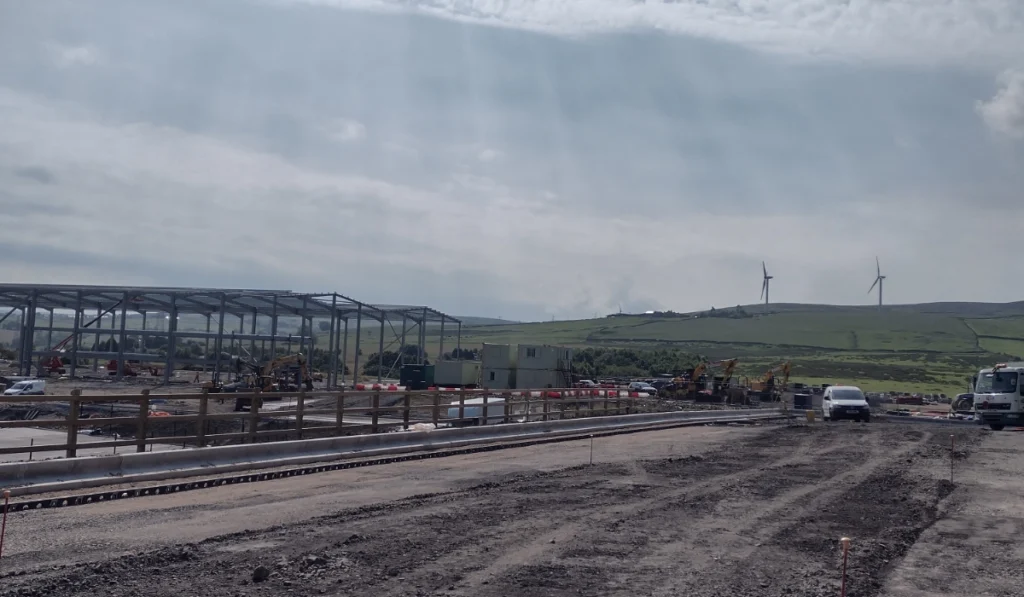
During an active monitoring campaign on a construction programme in Lancashire, our instrumentation recorded ground movement events that were inconsistent with the vibration profile of the adjacent construction activity. The readings were accurate, the data was timestamped and continuous, and the event signature was distinct from anything the construction programme was generating.
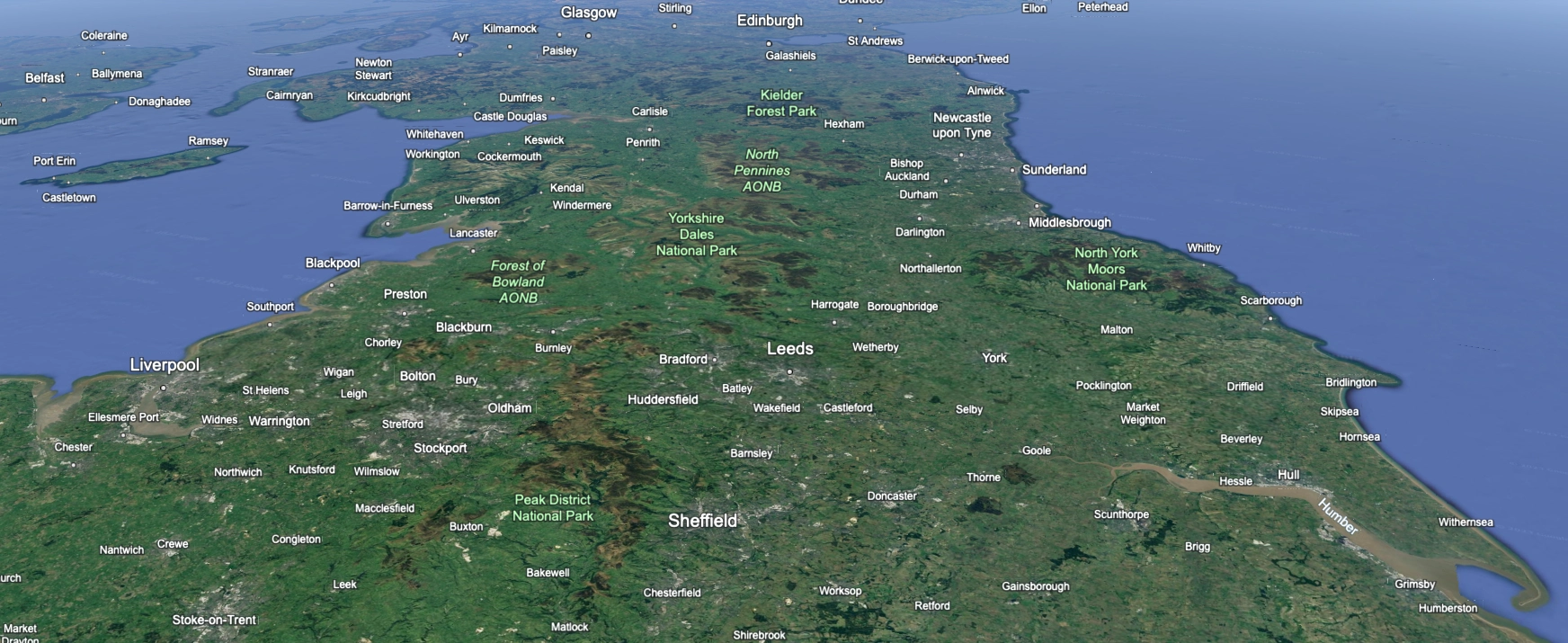
The events were subsequently confirmed as seismic activity – minor earthquakes, recorded across a wide area of Northern England including Lancashire and the Lake District. The instrumentation had detected and recorded ground tremors that the British Geological Survey confirmed were genuine seismic events in the region.
This was a monitoring success – the instrumentation performed exactly as specified, recording every ground movement event with accurate timestamping and clear data. The seismic events appeared in the monitoring records precisely because the equipment is sensitive enough to detect them.
What This Demonstrates About Monitoring Precision.
What This Demonstrates About Monitoring Precision.
Repeated precise levelling of fixed monitoring points to detect vertical movement in structures, pavements and ground surfaces. Sub-millimetre vertical accuracy – the standard for detecting settlement adjacent to excavation and piling works.
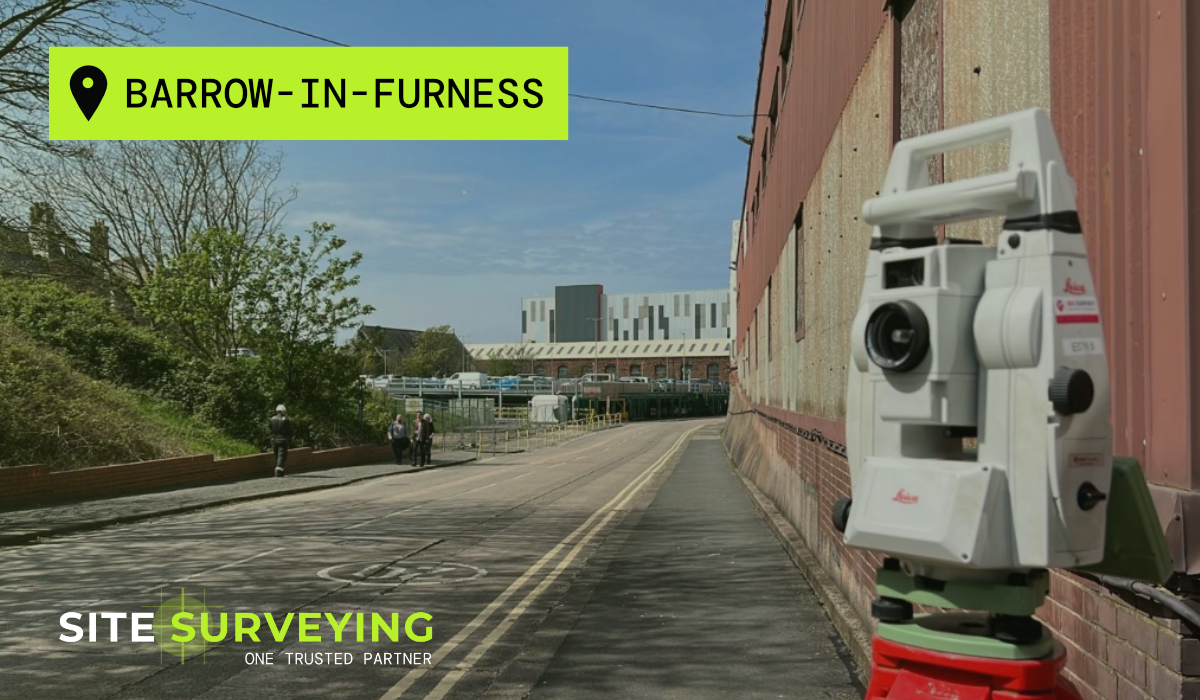
Total station monitoring of fixed prism targets installed on structures, retaining walls and facades – detecting both horizontal and vertical movement simultaneously for a complete three-dimensional picture of how a structure is moving.
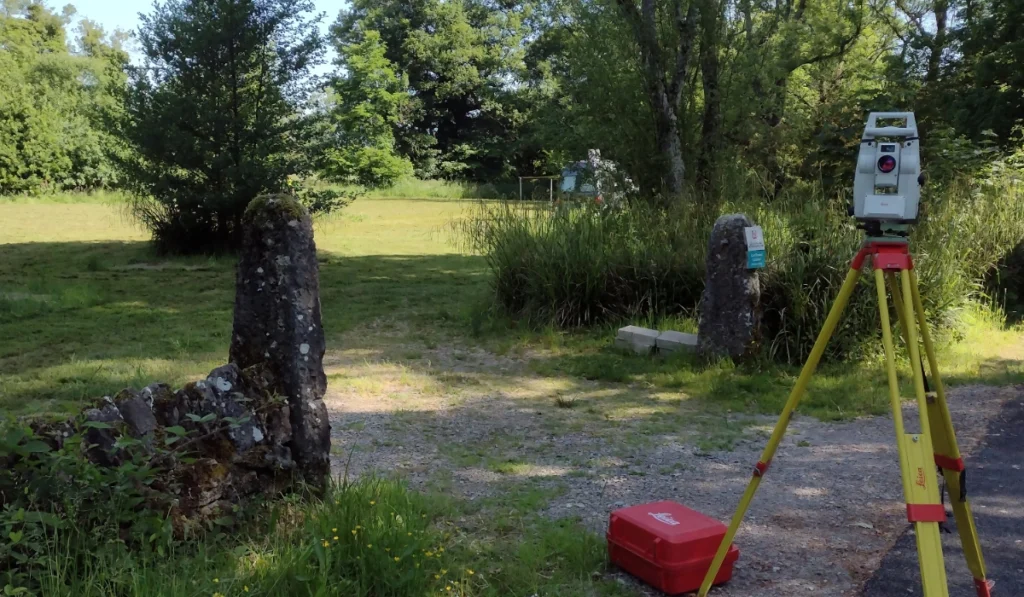
Automated instrumentation recording ground vibration events – from construction plant, piling operations and, in this case, natural seismic activity – continuously throughout the monitoring programme with timestamped event records.
Alert, Action and Alarm thresholds set by the engineer at the outset. When readings approach or reach threshold, our team reports immediately – not at the next scheduled visit. The purpose of monitoring is early warning. That only works if the warning is immediate.
What Our Data Shows.
What Our Data Shows.
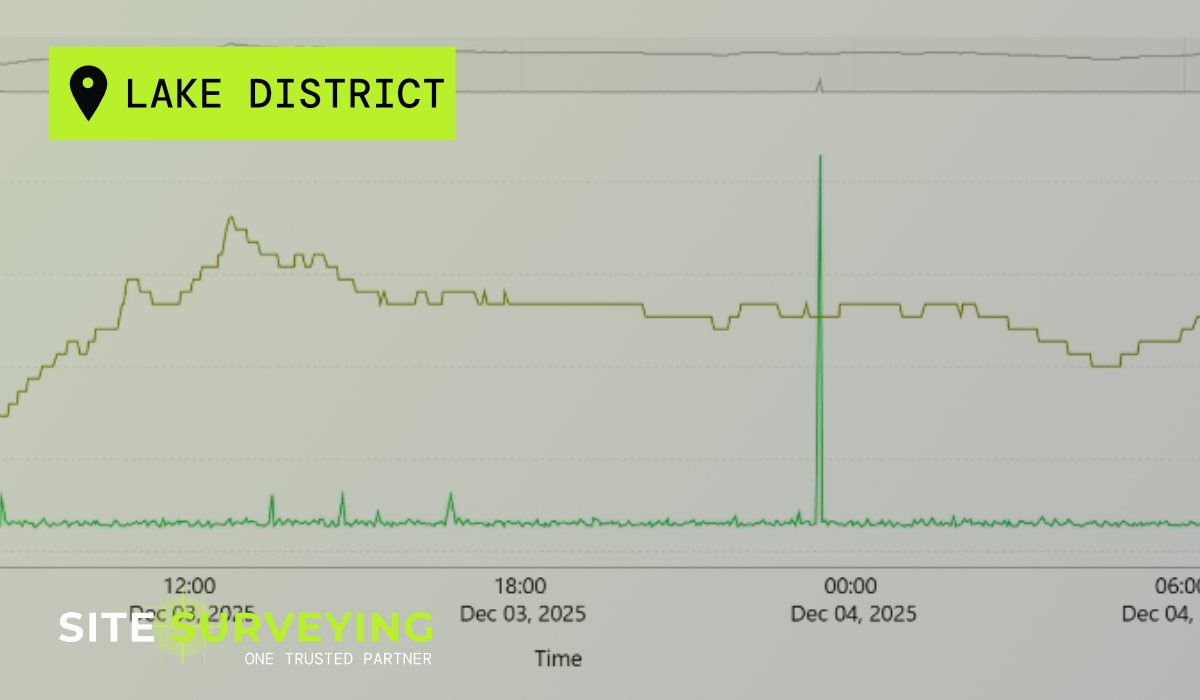
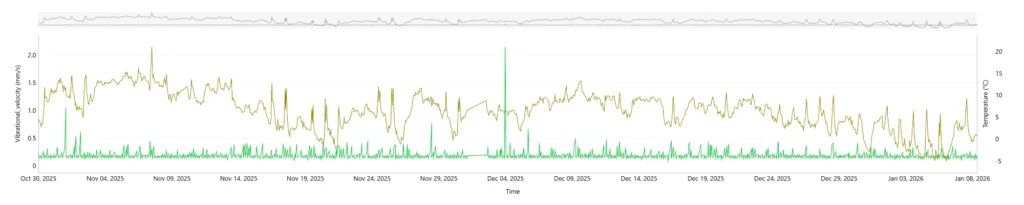
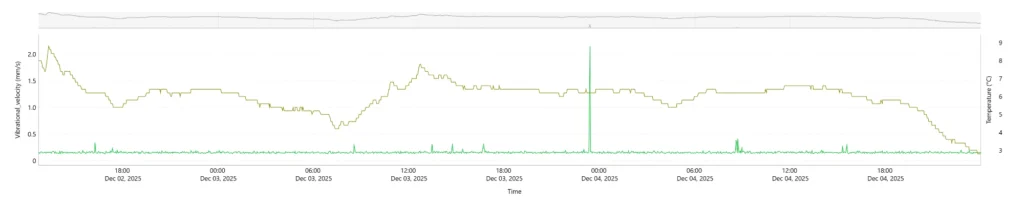
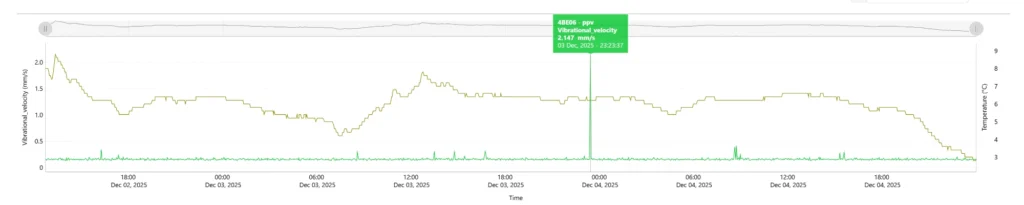
Review of the monitoring data highlights a clear and sudden spike in Peak Particle Velocity (PPV) at 23:23 on 3 December, coinciding precisely with the reported earthquake time.
- A sharp, isolated increase in vibration velocity, significantly above background levels, recorded by the vibrometer.
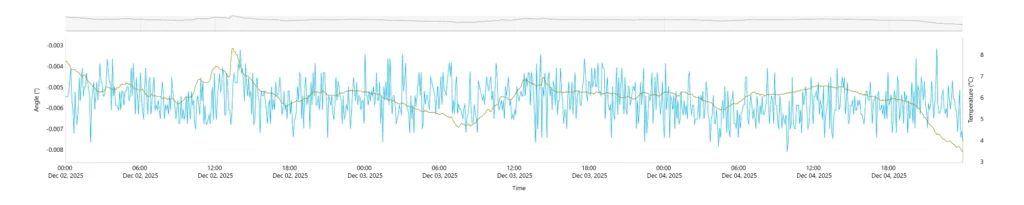
- After a quick analysis of the tilt meter readings at that point in time we were able to remotely determine that no movement out of the ordinary had taken place as a result of the earthquake. This has since been back uped by manual readings on monitoring prisms using traditional methods.
- The event stands out clearly from normal daily variations caused by temperature change, background traffic, or operational vibrations.
- No prolonged aftershocks or sustained vibration were recorded, consistent with a small seismic event rather than construction-related activity.
The clarity of the spike, combined with its timing and short duration, strongly supports the conclusion that the equipment captured the ground motion from the earthquake itself.
This finding aligns with wider reports of the tremor, including coverage by the BBC News, which confirmed the occurrence of a minor earthquake in the Lancashire and Lake District area on the same evening. Residents reported brief shaking and unusual sensations, typical of low-magnitude seismic events in the UK.
The Programme Outcome.
The Programme Outcome.
The construction programme continued throughout the monitoring campaign without incident. All structural movement readings remained within the tolerances specified by the engineer. The seismic events were recorded, reported and understood – they did not represent a risk to the adjacent structures being monitored, and the monitoring data made that clear.
The monitoring campaign delivered exactly what monitoring is designed to deliver: continuous, accurate, documented evidence of what the ground and the adjacent structures were doing throughout the programme. The fact that it also produced a record of seismic events across Northern England is a consequence of the precision of the instrumentation – and a demonstration of what that precision means in practice.
Why Monitoring Precision Matters for Your Programme
Why Monitoring Precision Matters for Your Programme
Every construction monitoring programme starts with the same question: is there movement? Everything else follows from the answer. If the instrumentation is not precise enough to detect the movement that matters, the monitoring programme is not protecting the project – it is providing a false sense of security.
Site Surveying Services deploys precision monitoring instrumentation – not general-purpose vibration sensors, not consumer-grade equipment, not systems that meet the minimum specification and no more. Our monitoring instrumentation is the same equipment we trust on live programmes adjacent to critical infrastructure, heritage structures and security-sensitive sites. It detects what moves. Including, on this occasion, the earth itself.
- Precision settlement monitoring using precise levelling - sub-millimetre vertical accuracy as standard
- Structural movement monitoring using total station and fixed prism targets - detecting horizontal and vertical movement simultaneously
- Automated vibration and event recording - continuous data with accurate timestamping throughout the programme
- Trigger level reporting - immediate notification when Alert, Action or Alarm thresholds are approached or reached
- Clear, professional reports - plain language interpretation of what the data shows, not a raw data dump